Procedure 14 – Bloodborne Pathogens Exposure Control Plan
REV. 4
Revision History
Revision
1
2
3
4
Date
03-26-03
03-16-12
04-11-12
09-14-16
Comments
Added electronic links
General Revision; reformat and renumbered procedure; added several definitions; removed reference to BBP kit; expanded Section 9.2 (minimum training requirements)
Revised Sections 6.5.1 and 10.2
Revised Section 6.6 (Regulated Waste Disposal)
1.0 PURPOSE
The procedure has been developed to limit and control potential occupational exposures to blood and other bodily fluids in the workplace for Nitro Construction Services
2.0 RESPONSIBILITY
The site manager or his qualified designee is responsible for the implementation of this procedure. The site manager or his qualified designee will also be responsible to assure that this exposure Control Plan is made available to all employees regardless of their exposure risks.
3.0 REFERENCES
29 CFR 1910.1030
4.0 DEFINITIONS
4.1 Blood – human blood, human blood components, and products made from human blood.
4.2 Bloodborne Pathogens – pathogenic microorganisms that are present in human blood and can cause disease in humans. These pathogens include, but are not limited to, hepatitis B virus (HBV) and human immunodeficiency virus (HIV).
4.3 Contaminated – the presence or the reasonably anticipated presence of blood or other potentially infectious materials on an item or surface.
4.4 Contaminated Sharps – any contaminated object that can penetrate the skin including, but not limited to, needles, scalpels, broken glass, broken capillary tubes, and exposed ends of dental wires.
4.5 Decontamination – the use of physical or chemical means to remove, inactivate, or destroy bloodborne pathogens on a surface or item to the point where they are no longer capable of transmitting infectious particles and the surface or item is rendered safe for handling, use or disposal.
4.6 Engineering Controls – controls (i.e., sharps disposal containers, self-sheathing needles, safer medical devices, such as sharps with engineered sharps injury protections and needleless systems) that isolate or remove the bloodborne pathogens hazards from the workplace.
4.7 Exposure Incident – a specific eye, mouth, other mucous membranes, non-intact skin, or parental contact with blood or other potentially infectious materials that results from the performance of an employee’s duties.
4.8 Hand Washing Facilities – a facility providing an adequate supply of running potable water, soap, and single-use towels or hot air-drying machines.
4.9 HBV – hepatitis B virus.
4.10 HIV – the human immunodeficiency virus.
4.11 Occupational Exposure – reasonably anticipated skin, eye, mucous membrane, or parenteral (piercing the skin) contact with blood or other potentially infectious materials that may result from the performance of an employee’s duties.
4.12 Other Potentially Infectious Materials:
4.12.1 The following human body fluids: semen, vaginal secretions, cerebrospinal fluid, synovial fluid, pleural fluid, pericardial fluid, peritoneal fluid, amniotic fluid, saliva in dental procedures, any bodily fluid that is visibly contaminated with blood, and all body fluids in situations where it is difficult or impossible to differentiate between body fluids;
4.12.2 Any unfixed tissue or organ (other than intact skin) from a human (living or dead); and
4.12.3 HIV-containing cell or tissue cultures, organ cultures, and HIV- or HBV-containing culture medium or other solutions; and blood, organs, or other tissues from experimental animals infected with HIV or HBV.
4.13 Personal Protective Equipment – specialized clothing or equipment is worn by an employee for protection against a hazard. General work clothes (e.g., uniforms, pants, shirts, or blouses) not intended to function as protection against a hazard is not considered to be personal protective equipment.
4.14 Regulated Waste – liquid or semi-liquid blood or other potentially infectious materials; contaminated items that would release blood or other potentially infectious materials in a liquid or semi-liquid state if compressed; items that are caked with dried blood or other potentially infectious materials and are capable of releasing these materials during handling; contaminated sharps; and pathological and microbiological wastes containing blood or other potentially infectious materials.
4.15 Sterilize – the use of a physical or chemical procedure to destroy all microbial life including highly resistant bacterial endospores.
4.16 Universal Precautions – an approach to treat all human blood and certain human body fluids as if known to be infectious for HIV, HBV, and other bloodborne pathogens.
4.17 Work Practice Controls – controls that reduce the likelihood of exposure by altering the way a task is performed (e.g., prohibiting recapping of needles by a two-handed technique.)
5.0 EXPOSURE DETERMINATION
OSHA requires Nitro Construction Services to perform an assessment to determine which employees may incur occupational exposure to blood or other potentially infectious materials. The exposure determination is made without regard to the use of personal protective equipment (i.e. employees are exposed even if they wear personal protective equipment). Working in the construction industry we rarely encounter infectious diseases intentionally, however, we may on occasion be exposed to an injured co-worker in the field.
Our list of Job Classification is limited to first aid responders and first aid medics. First Aid Responders are construction employees working in the field who have volunteered to come to the aid of fellow workers and who have met the necessary training requirements. First Aid Medics are working in a first aid room stationed on larger job sites. These are usually emergency medical technicians, nurses, etc., and are usually subcontracted to work the post.
6.0 IMPLEMENTATION SCHEDULE AND METHODOLOGY
OSHA requires that this plan also includes a schedule and method of implementation for the various requirements of the standard. The following complies with this requirement.
6.1 Compliance Methods
6.1.1 Universal precautions will be observed at our job sites, to prevent contact with blood or other potentially infectious materials.
6.1.2 Engineering and work practice controls will be utilized to eliminate or minimize exposure to employees at our work sites.
6.1.3 The above controls will be examined and maintained on a regular schedule. First aid rooms will be examined and maintained daily. The First Aid attendant has the responsibility to review the effectiveness of individual control.
6.1.4 Handwashing facilities are also to be made available to the employees to ensure against exposure to blood or other potentially infectious materials.
6.1.4.1 On smaller job sites where handwashing facilities are not feasible, Nitro Construction Services will be providing either an antiseptic cleanser in conjunction with a lean cloth/paper towel or antiseptic towelettes.
6.1.4.2 These products will be in the job trailer or superintendent’s office. It shall be the site manager’s responsibility to assure that these products are maintained in good usable condition and made readily available.
6.1.5 After the removal of personal protective gloves, employees shall wash hands and any other potentially contaminated skin area immediately or as soon as feasible with soap and water.
6.1.6 If employees incur exposure to their skin or mucous membranes then those areas shall be washed or flushed with water as appropriate or as soon as feasible following contact.
6.2 Work Area Restrictions
6.2.1 In work areas where there is a reasonable likelihood of exposure to blood or other potentially infectious materials, employees are not to eat, drink; apply cosmetics or lip balm, smoke, or handle contact lenses.
6.2.2 All procedures will be conducted in a manner that will minimize splashing, spraying, splattering, and generation of droplets of blood or other potentially infectious materials.
6.3 Specimens
Specimens of blood, urine other potentially infectious materials will be placed in a container which prevents leakage during the collection, handling, processing, storage, and transport of the specimens.
6.3.1 The container used for this purpose will be labeled or color-coded in accordance with the requirements of the OSHA standard.
6.3.2 If outside contamination of the primary container occurs, the primary container shall be placed within a second container which prevents leakage during handling, storage, or transport and is labeled or color-coded accordingly.
6.3.3 The Chain of Custody method will be utilized in the instances of urine sample taking and the containers will be of the approved nature and will be promptly labeled and stored away from the work area. This sample will be removed from the site or disposed of (urine flushed) before the end of the shift.
6.4 Contaminated Equipment
Equipment which may become contaminated with blood or other potentially infectious materials shall be examined prior to servicing or shipping and shall be decontaminated as necessary unless the employer can demonstrate that the decontamination of the equipment is not feasible.
6.4.1 A readily observable label shall be attached to the equipment stating which portion remains contaminated.
6.4.2 The employer ensures this information is communicated to all affected persons prior to handling, servicing, or shipping.
6.5 Personal Protective Equipment
Personal protective equipment will be chosen based on the anticipated exposure to blood or other potentially infectious materials.
6.5.1 Where there is occupational exposure, the employer shall provide appropriate personal protective equipment at no cost to the employee such as, but not limited to, gloves, gowns, laboratory coats, face shields or masks and eye protection, and mouthpieces, resuscitation bags, pocket masks, or other ventilation devices.
6.5.2 All garments which are penetrated by blood shall be removed immediately or as soon as feasible.
6.5.3 All personal protective equipment will be removed prior to leaving the work area.
6.5.4 The garments and used blood-soaked bandages etc. shall be disposed of in a red Biohazard bag. This bag will be disposed of according to regulatory requirements.
6.5.5 Gloves shall be worn where it is reasonably anticipated that employees will have hand contact with blood, other potentially infectious materials, non intact skin, and mucous membranes.
6.5.6 Disposable gloves used for emergency use on our job sites are not to be washed or decontaminated for re-use.
6.5.7 Masks in combination with eye protection devices, such as goggles or glasses with solid side shields, or chin-length face shields, are required to be worn whenever splashes, spray, splatter, or droplets of blood or other potentially infectious materials may be generated.
6.5.8 All contaminated work surfaces will be decontaminated after completion of procedures and immediately or as soon as feasible after any spill of blood or other potentially infectious materials.
6.6 Regulated Waste Disposal
Regulated waste other than sharps shall be placed in appropriate containers. These will be the red plastic bags marked with the biohazard placard that are closable, puncture-resistant, and leakproof on sides and bottom. During use, containers for sharps shall be maintained in an upright position throughout use and be replaced routinely so as not to be allowed to overfill.
6.7 Laundry Procedure
6.7.1 Laundry contaminated with blood or other potentially infectious materials will be handled as little as possible. Such laundry will be placed in appropriately marked bags at the location where it was used. Such laundry will not be sorted or rinsed in the area of use.
6.7.2 All employees who handle contaminated laundry will utilize personal protective equipment to prevent contact with blood or other potentially infectious materials.
6.7.3 Whenever contaminated laundry is wet and presents a reasonable likelihood of soak-through of or leakage from the bag or container, the laundry shall be placed and transported in bags or containers which prevent soak-through and/or leakage of fluids to the exterior.
7.0 HEPATITIS B VACCINE
7.1 All employees who have been identified as having exposure to blood or other potentially infectious materials will be offered the Hepatitis B vaccine, at no cost to the employee. The vaccine will be offered within 10 working days of their initial assignment to work involving the potential for occupational exposure to blood or other potentially infectious materials.
7.1.1 Employees who decline the Hepatitis B vaccine will sign a waiver, which uses the wording in Appendix A of the OSHA standard.
7.1.2 Employees who initially decline the vaccine but who later wish to have it may then have the vaccine provided at no cost. The site manager is to set up a location in the area to have this administered.
7.2 Post Exposure Evacuation and Follow up
When the employee incurs an exposure incident, it should be reported to the on-site safety supervisor, or, in situations where none are present, the site manager.
All employees who incur an exposure incident will be offered post exposure evaluation and follow up in accordance with the OSHA standard.
7.3 The follow up will include the following:
7.3.1 Documentation of the route of exposure and the circumstances related to the incident. If possible, the identification of the source individual, and if possible, the status of the source individual. The blood of the source individual will be tested (after consent is obtained) for HIV/HBV infectivity.
7.3.2 Results of testing of the source individual will be made available to the exposed employee, with the exposed employee informed about the applicable laws and regulations concerning disclosure of the identity and infectivity of the source individual. The employee will be offered the option of having his/her blood collected for testing of the employee’s HIV/HBV serological status. The blood sample will be preserved for up to 90 days to allow the employee to decide if the blood should be tested for HIV serological status. However, if the employee decides prior to that time that testing will or will not be conducted then appropriate action can be taken and the blood sample discarded.
7.3.3 The employee will be offered post-exposure prophylaxis in accordance with the current recommendations of the US. Public Health Service.
7.3.4 The employee will be given appropriate counseling concerning precautions to take during the period after the exposure incident. The employee will also be given information on what potential illnesses to be alert for and to report any related experiences to appropriate personnel.
7.3.5 The site manager in conjunction with the Corporate Safety Department has been designated to assure that the policy outlined here is effectively carried out as well as to maintain records related to this policy.
7.4 Interaction with Health Care Professionals
7.4.1 A written opinion shall be obtained from the health care professional that evaluates employees of this Company. Written opinions will be obtained in the following instances:
7.4.1.1 When the employee is sent to obtain the Hepatitis B vaccine.
7.4.1.2 Whenever the employee is sent to a health care professional following an exposure incident.
7.4.2 Health care professionals shall be instructed to limit their opinions to:
7.4.2.1 Whether the Hepatitis B vaccine is indicated and if the employee has received the vaccine, or for evaluation following an incident,
7.4.2.2 That the employee has been informed of the results of the evaluation, and
7.4.2.3 That the employee has been told about any medical conditions resulting from exposure to blood or other potentially infectious materials.
7.4.3 All other findings or diagnoses shall remain confidential and shall not be included in the written report.
Note: The written opinion to the employer (Nitro Construction Services) is not to reference any personal medical information.
8.0 Communication of Hazards to Employees
8.1 Labels
8.1.1 Warning labels shall be affixed to containers of regulated waste, refrigerators, and freezers containing blood or other potentially infectious material; and other containers used to store, transport, or ship blood or other potentially infectious materials.
8.1.2 Labels required by this section shall include the following legend:
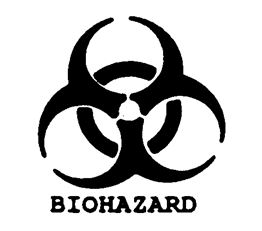
8.1.3 These labels shall be fluorescent orange or orange-red or predominantly so, with lettering and symbols in a contrasting color.
8.1.4 Labels shall be affixed as close as feasible to the container by string, wire, adhesive, or other methods that prevents their loss or unintentional removal.
8.1.5 Red bags or red containers may be substituted for labels.
8.1.6 Individual containers of blood or other potentially infectious materials that are placed in a labeled container during storage, transport, shipment, or disposal are exempted from the labeling requirement.
8.1.7 Labels required for contaminated equipment shall be in accordance with this section and shall also state which portions of the equipment remain contaminated.
8.1.8 Regulated waste that has been decontaminated need not be labeled or color-coded.
8.2 Signs
8.2.1 The employer shall ensure signs are posted at the entrance to First Aid room notifying when an infectious agent may be present, as well as when blood lead samples are being taken.
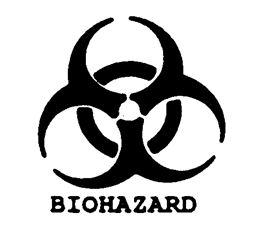
(Name of the Infectious Agent)
(Special requirements for entering the area)
(Name, telephone number of the laboratory, director, or another responsible person.)
8.2.2 These signs shall be fluorescent orange-red or predominantly so, with lettering and symbols in a contrasting color.
9.0 TRAINING
9.1 Training for all employees will be conducted prior to initial assignment to tasks where occupational exposure may occur and at least annually thereafter.
9.2 The training program shall contain at a minimum the following elements:
9.2.1 The OSHA Bloodborne Pathogens regulatory standard.
9.2.2 A general explanation of epidemiology and symptoms of bloodborne diseases.
9.2.3 An explanation of the modes of transmission of bloodborne pathogens.
9.2.4 An explanation of this Exposure Control Plan and how a written copy may be obtained.
9.2.5 An explanation of the appropriate methods for recognizing tasks and other activities that may involve exposure to blood and other potentially infectious materials.
9.2.6 An explanation of the use and limitations of methods that will prevent or reduce exposure to blood and other potentially infectious materials, including appropriate engineering controls, work practices, and personal protective equipment.
9.2.7 Information on the types, proper use, location, removal, handling, decontamination, and disposal of personal protective equipment.
9.2.8 An explanation of the basis for selection of the personal protective equipment.
9.2.9 Information on the hepatitis B vaccine, including information on its efficacy, safety, method of administration, the benefits of being vaccinated, and that the vaccine will be offered free of charge.
9.2.10 Information on the appropriate actions to take and persons to contact in an emergency involving blood or other potentially infectious materials.
9.2.11 An explanation of the procedure to follow if an exposure incident occurs, including the method of reporting the incident and the medical follow-up that will be made available.
9.2.12 Information on the post-exposure evaluation and follow-up that the employer is required to provide for the employee following an exposure incident.
9.2.13 An explanation of the signs and labels and/or color-coding.
9.2.14 An opportunity for interactive questions and answers with the person conducting the training session.
10.0 RECORDKEEPING
10.1 The Project Manager will implement all records for medical and training required by the OSHA standard (29 CFR 1910.1030(h)).
10.2 Medical records shall be kept for the duration of employment plus 30 years.
10.3 These records will be maintained for 3 years from the date on which the training occurred.
10.4 Training records shall include the following:
10.4.1 Dates of the training sessions.
10.4.2 The contents or a summary of the training sessions.
10.4.3 The names and qualifications of persons conducting training; and
10.4.4 The names and job titles of all persons attending the training sessions.
10.5 All employees involved with bodily fluids will receive annual refresher training.
Note: This training is to be conducted within one year of the employee’s previous training.
10.6 All provisions required by the standard will be implemented immediately upon receipt of this program.
11.0 AVAILABILITY
11.1 All records required to be maintained by this section shall be made available upon request to the Assistant Secretary and the Director for examination and copying.
11.2 Employee training records required by this paragraph shall be provided upon request for examination and copying to employees, to employee representatives, to the Director, and to the Assistant Secretary.
11.3 Employee medical records required by this paragraph shall be provided upon request for examination and copying to the subject employee, to anyone having written consent of the subject employee, to the Director, and to the Assistant Secretary in accordance with 29 CFR 1910.1020. Medical records must have written consent of the employee before being released.
12.0 TRANSFER OF RECORDS
12.1 Nitro Construction Services shall comply with the requirements involving the transfer of records set forth in 29 CFR 1910.1020(h).
12.2 If Nitro Construction Services ceases to do business, and there is no successor employer to receive and retain the records for the prescribed period, the employer shall notify the Director, at least three months prior to their disposal and transmit them to the Director, if required by the Director to do so, within that three month period.